The last time you shipped an LLM-powered agent to production, it likely failed in a way no leaderboard predicted. The model that scored 92% on MMLU-Pro couldn’t parse a simple multi-step instruction with a date change. The “state-of-the-art” reasoning model collapsed when you asked it to use a tool it had never seen in a benchmark. This is not bad luck. This is the LLM benchmark crisis.
Every major leaderboard is saturated. Models that launched six months apart score within fractions of a percent on the same static tests. The noise from prompt wording, random seeds, and contamination now dwarfs the signal of actual capability. We are optimizing for a test that no longer tests anything real. And for engineers building agentic systems—where models must plan, use tools, recover from errors, and adapt to dynamic context—these benchmarks are worse than useless. They are actively misleading.
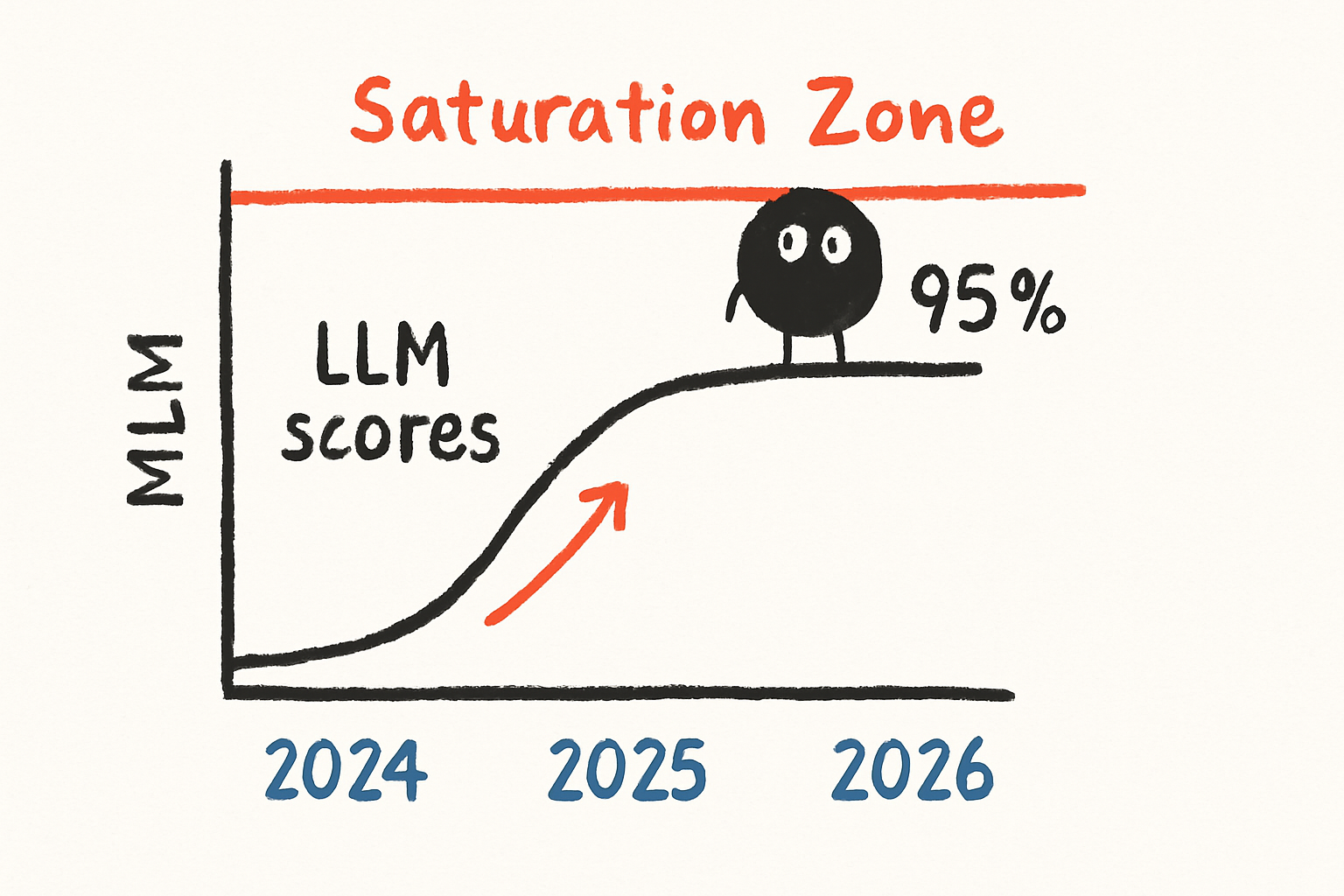
The Illusion of Progress: How Benchmark Saturation Hides Real Gaps
Look at any major LLM leaderboard from 2025 or 2026. The Vellum LLM Leaderboard shows a dense pack of models within 2-3 points on MMLU, HumanEval, and GSM8K. The difference between the 5th and 20th best model is often smaller than the variance you get from changing the temperature from 0 to 0.3. This is benchmark saturation.
The problem is not that benchmarks are hard. It is that they are easy to memorize. Many static benchmarks have been publicly available for years. Their question sets are scraped, leaked, and included in training data. A 2025 survey on LLM benchmarks from arXiv confirmed that contamination is endemic—models routinely score higher on leaked subsets than on held-out samples. The result is a leaderboard that measures data memorization, not reasoning.
Why does this matter for an AI engineer? Because you are not deploying a model to answer trivia. You are deploying a model that needs to infer a user’s intent from a fragmented chat history, decide which API to call, handle a 500 error, and re-prompt itself without hallucinating. None of those capabilities appear on MMLU.
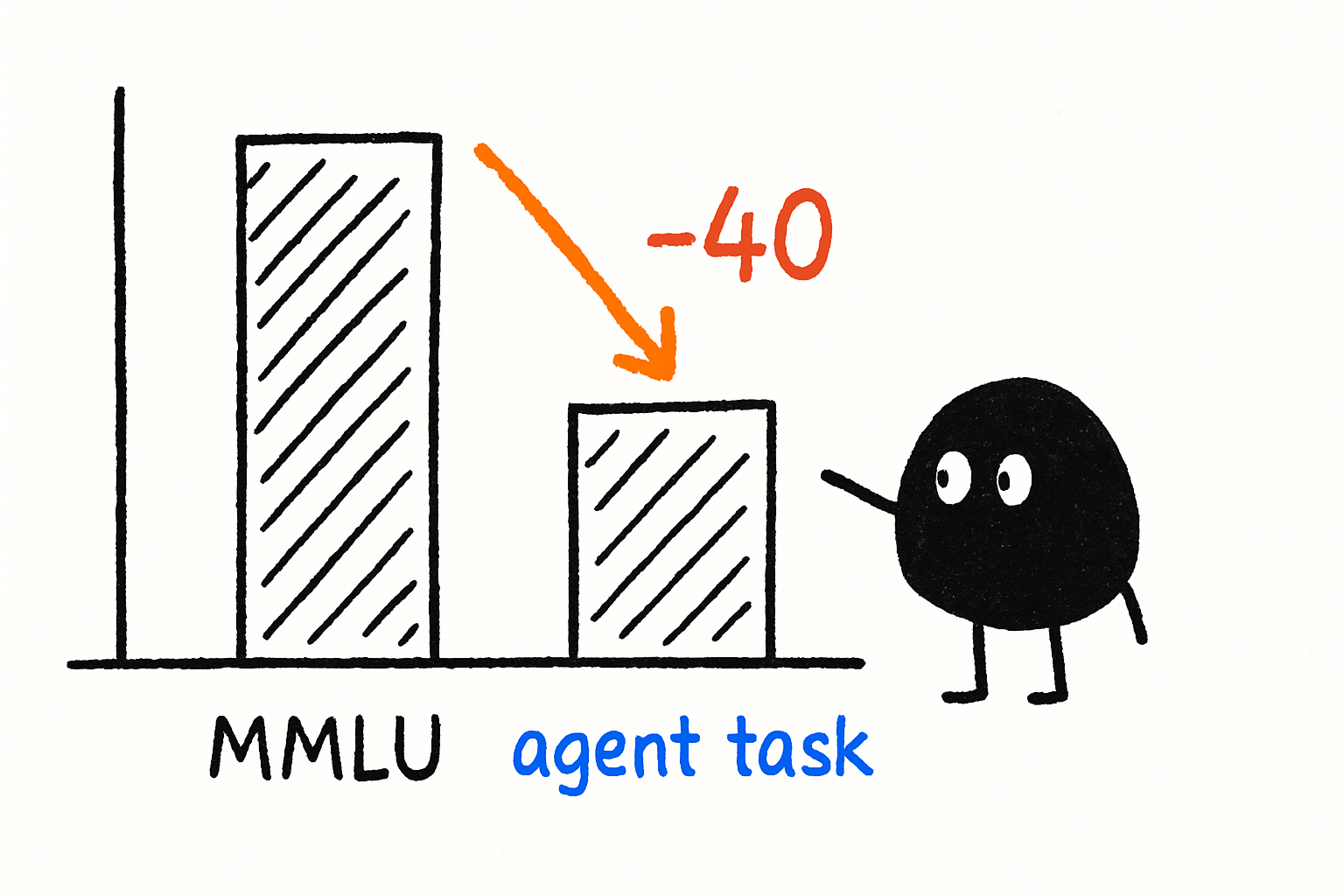
Q: Are current LLM benchmarks completely useless? A: No, but they are dangerously narrow. They measure factual recall and basic reasoning under clean conditions. For production agentic workloads—where the model must act on incomplete information, use tools, and handle real-time feedback—they have near-zero predictive validity. A high MMLU score is a necessary condition for a capable model, but it is far from sufficient.
Why Static Benchmarks Fail Agentic AI Workloads
Agentic workloads are fundamentally different from the question-answering format of static benchmarks. When you build an AI agent, you need it to:
- Plan across multiple steps without losing the original goal.
- Use tools (APIs, databases, file systems) with correct syntax and error handling.
- Recover from mistakes without human intervention.
- Adapt to context shifts mid-conversation.
- Follow complex, conditional instructions that change based on prior outputs.
None of these are measured by MMLU, HellaSwag, or ARC. Even coding benchmarks like HumanEval test isolated function generation, not the iterative debugging and tool orchestration that real agentic coding requires.
Consider the agentic loop: the model receives a task, generates a plan, calls a tool, gets a result, and decides the next action. A single mistake in any step—wrong API parameter, misread error message, or failure to update the plan—breaks the entire loop. Static benchmarks never penalize cascade failures. They give you a single score for a single answer. That is not evaluation; it is a multiple-choice test.
My take: I have stopped trusting any leaderboard that does not include a multi-turn, tool-use component. If a benchmark cannot simulate a 10-step agentic workflow with real API calls, it is not evaluating the model I need to ship. The gap between a 95th-percentile MMLU score and a production-ready agent is wider than most organizations realize. We are deploying models based on metrics that have no correlation with success.
LiveBench and the Push for Dynamic, Adversarial Evaluation
The most promising response to the benchmark crisis is LiveBench. Developed by a team at MIT and other institutions, LiveBench generates fresh, uncontaminated questions every month. It uses data from recent news, newly released code, and real-world math problems that cannot be memorized. The questions are also adversarially filtered—if a model can answer them via pattern matching, they are removed.
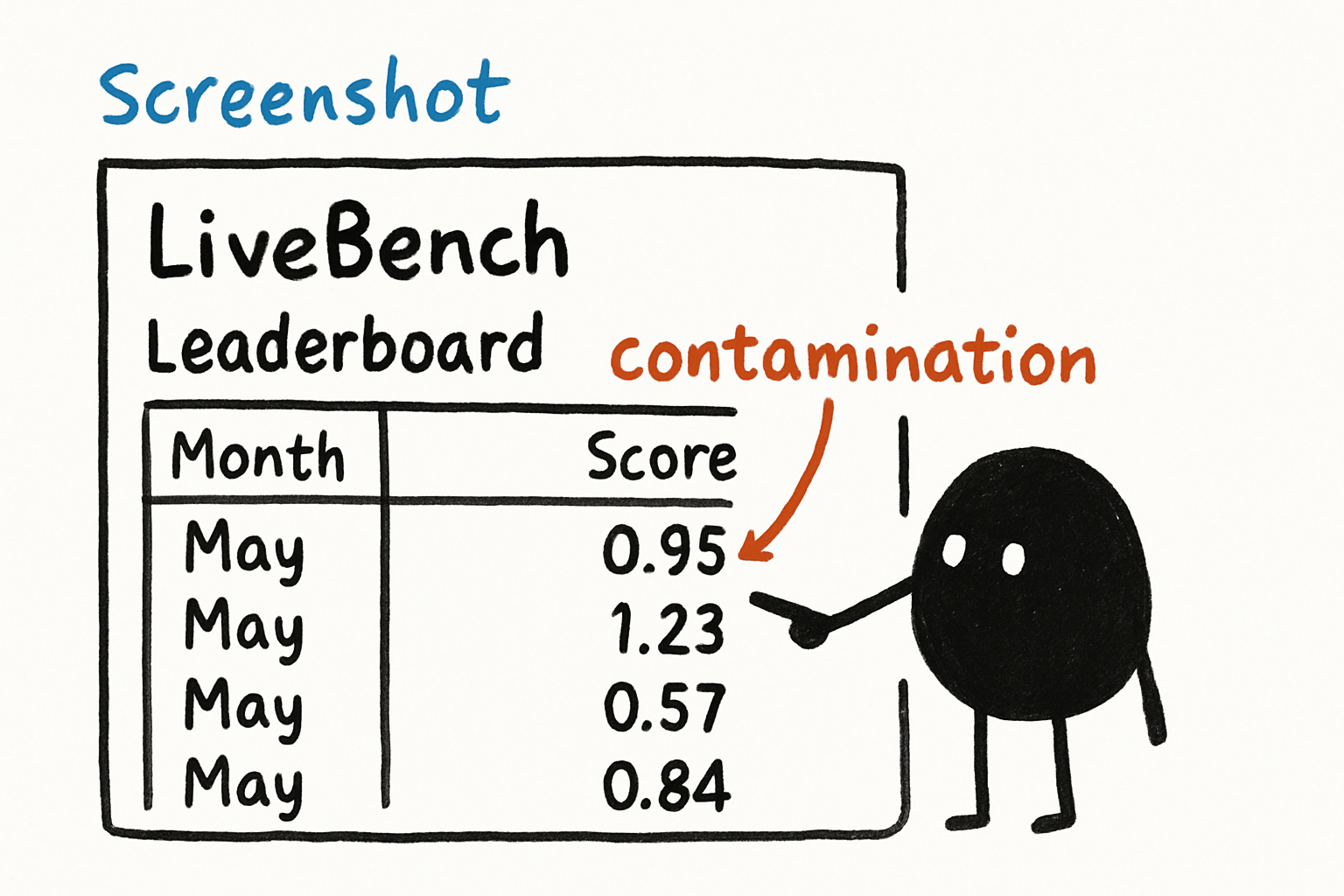
LiveBench addresses two core failures of static benchmarks:
- Contamination resistance: Because questions are new each month, models cannot train on the test set. This eliminates the inflation we see on MMLU-Pro and similar benchmarks.
- Dynamic difficulty: The benchmark adapts. If all models start scoring above 90% on a category, that category is retired or replaced with harder variants.
For AI engineers, LiveBench is a step in the right direction, but it still has gaps. It tests reasoning and knowledge, not agentic behavior. There is no tool-use component, no multi-turn planning, no error recovery. It is a better static benchmark, not yet a dynamic agent evaluation.
Q: Should I switch entirely to LiveBench for model selection? A: Use LiveBench as a contamination check, not as your sole evaluation. It tells you whether a model can handle novel, complex questions. But you still need to build your own agent-specific tests to measure planning, tool use, and recovery. LiveBench is a necessary upgrade, not a complete solution.
Context Engineering as the Missing Evaluation Layer
Here is where most evaluation frameworks get it wrong: they test the model in isolation. But in production, the model never sees a clean prompt. It sees a context window filled with previous turns, system instructions, tool outputs, and user corrections. The quality of that context determines model performance more than the model itself.
This is the domain of context engineering—the practice of designing, structuring, and maintaining the context that an LLM operates within. And it is the missing layer in every major benchmark.
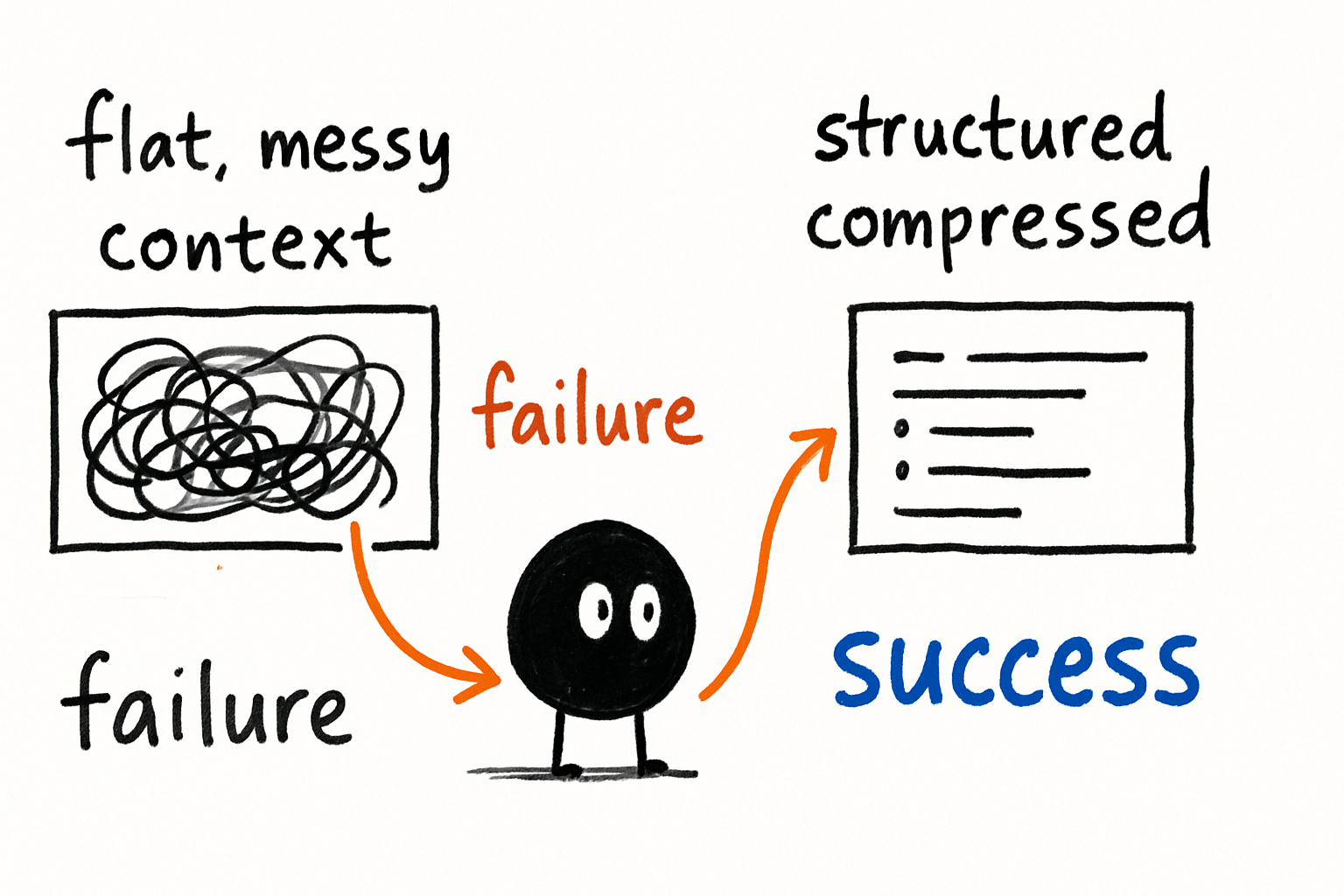
Consider two identical models, both scoring 94% on MMLU. Deploy them in an agentic system with different context strategies:
- Model A receives a flat, chronological history of the conversation.
- Model B receives a context window that has been compressed, deduplicated, and structured with explicit role labels, priority ordering, and a summary of completed steps.
Model B will outperform Model A by a wide margin on any realistic task. The benchmark never captures this. It treats context as a constant, when in practice it is the most important variable.
My take: Stop optimizing for model selection. Start optimizing for context design. The difference between a failing and a succeeding agent is often not the model but how you structure the system prompt, how you handle tool output, and how you manage the sliding window. I have seen a GPT-4o agent outperform a Claude Opus agent simply because the context pipeline was better engineered. That is not a model win—it is a context engineering win.
Building Your Own Agent-Relevant Benchmark: A Practical Guide
You cannot rely on public leaderboards to tell you if a model will work in your agentic system. You have to build your own evaluation. Here is a practical framework.
Step 1: Define your agentic tasks
List the 5-10 most common workflows your agent will perform. For each, write:
- The initial user request.
- The expected sequence of tool calls.
- The error conditions it must handle.
- The success criteria (e.g., correct API call, correct output format, no hallucinated steps).
Step 2: Create a multi-turn evaluation harness
Do not test single prompts. Build a loop that:
- Sends the initial request.
- Receives the model’s response (which may include tool calls).
- Simulates tool outputs (including errors).
- Sends the result back to the model.
- Repeats for 5-10 turns.
This is the only way to measure planning and recovery.
Step 3: Measure what matters
Track these metrics, not accuracy:
- Task completion rate: Did the agent finish the workflow?
- Tool call correctness: Were API parameters correct on the first try?
- Recovery rate: After an error, did the agent retry correctly or hallucinate a fix?
- Context window efficiency: How many tokens did the agent consume per successful task?
Step 4: Vary the context
Test the same model with different context strategies:
- Raw history vs. compressed summary.
- With vs. without explicit step tracking.
- With different system prompt structures.
This will tell you where your bottleneck is.
Step 5: Run monthly, not once
Models change. APIs change. Your agent’s behavior drifts. Rerun your benchmark monthly. If you see a drop in recovery rate or tool call accuracy, you catch it before it hits production.
Key takeaways
- Static benchmarks like MMLU are saturated and contaminated. They no longer differentiate models meaningfully.
- Agentic workloads require evaluation of planning, tool use, and error recovery—none of which appear on mainstream leaderboards.
- LiveBench is a useful upgrade for contamination resistance, but still lacks agentic components.
- Context engineering is the most underrated variable in agent performance. Optimize context before optimizing model selection.
- Build your own multi-turn, tool-use benchmark. It is the only reliable way to evaluate models for production agents.
- Run evaluations monthly. Model drift is real and silent.
The LLM benchmark crisis is not an academic problem. It is a deployment problem. Every week you rely on a saturated leaderboard to choose a model, you risk shipping an agent that fails in the first real interaction. The fix is not a better leaderboard. It is a better evaluation—one that tests what your agent actually does, not what a trivia question asks.