You’ve been running your agentic stack on static benchmarks, and it’s lying to you. LiveBench doesn’t just measure accuracy; it throws dynamic, time-sensitive tasks at your agents and watches them fall apart. The gap between a model that scores 95% on MMLU and one that can reliably book a meeting across three APIs is the gap between demo magic and production hell. I’ve spent the last year building agentic loops that actually survive in the wild, and LiveBench is the first benchmark that forces us to admit our infrastructure is fundamentally brittle.
The Agentic AI Infrastructure Gap
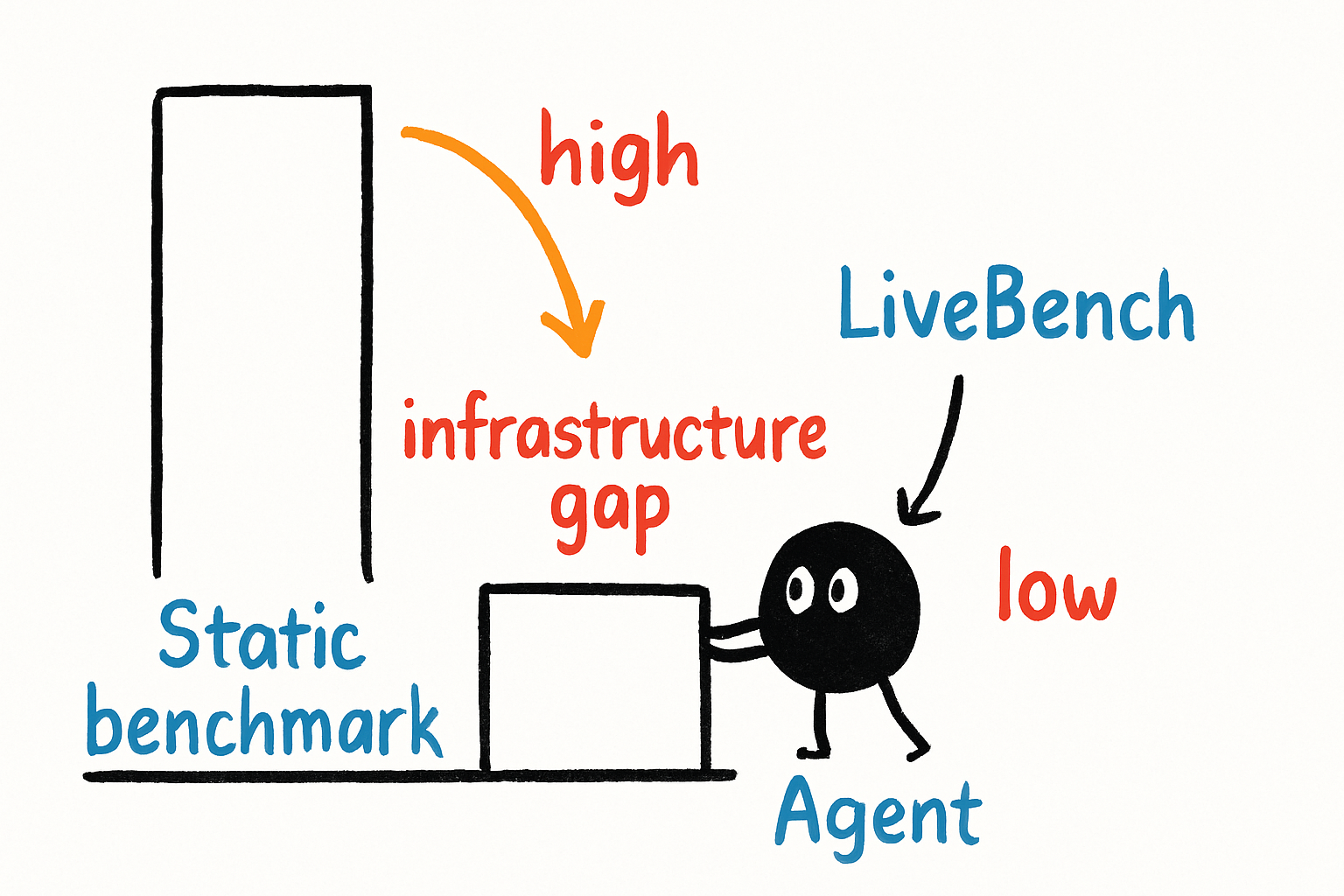
Most teams treat agentic AI infrastructure as a simple stack: LLM API call, some prompt engineering, a vector store, and a loop. That worked for chatbots. It fails for agents that need to persist context across hours, adapt to real-time data changes, and recover from partial failures without dropping the entire task.
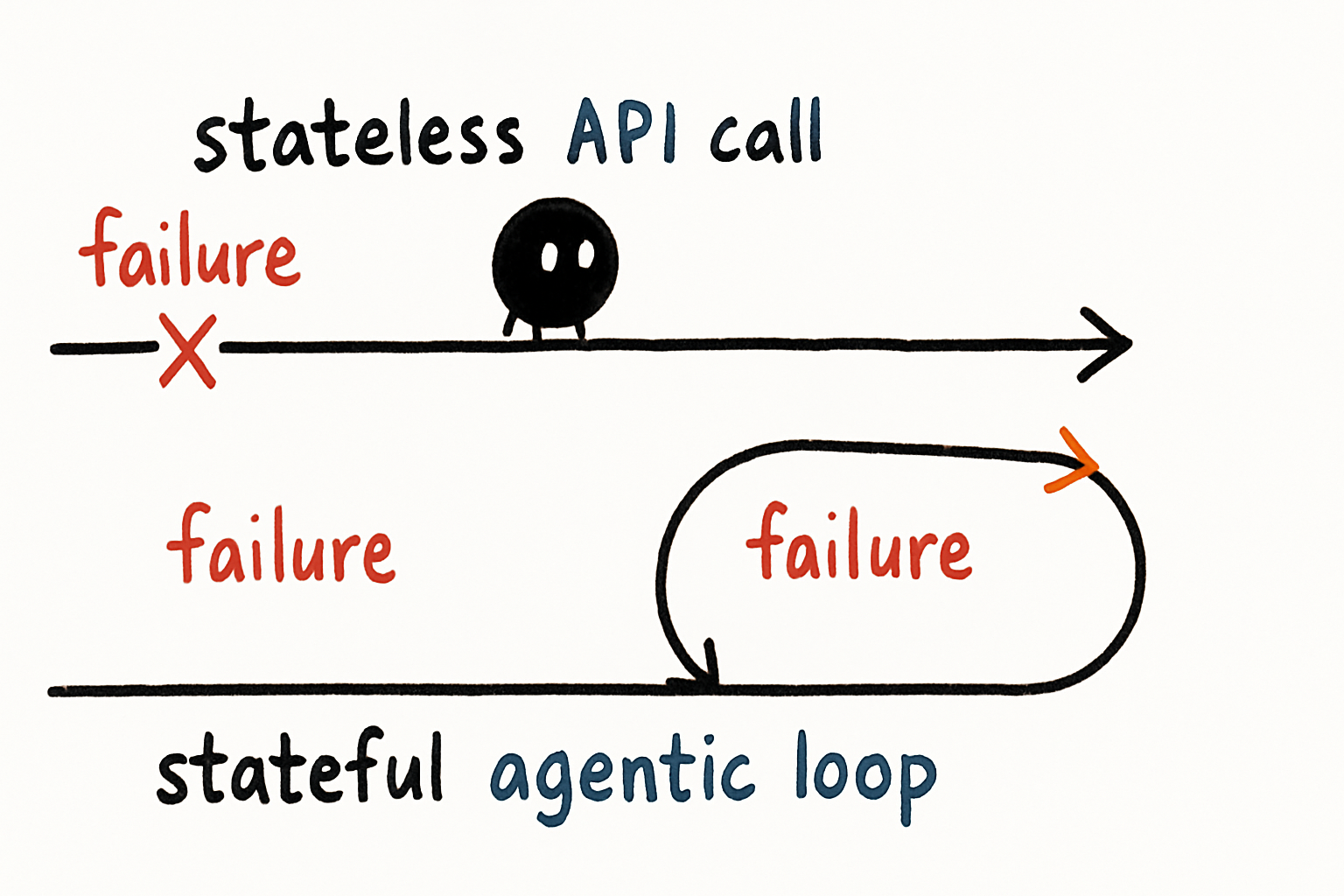
The core problem is that LLMs are stateless by design, but agentic workflows demand statefulness. Every time your agent calls an API, waits for a response, or forks into a sub-task, you’re creating a point of fragility. If the context window gets clipped, the agent forgets what it was doing. If the tool returns an unexpected error, the agent either loops forever or hallucinates a recovery. This isn’t a prompt engineering problem; it’s an infrastructure problem.
Nvidia’s recent push into agentic AI infrastructure, stacking GPU orchestration with memory management and tool routing, signals that the hardware and platform vendors know this gap exists. But their solutions are still built for batch inference, not for agents that need to maintain a coherent thread of reasoning across minutes or hours of real-world interaction. The gap is between what we benchmark and what we deploy.
What LiveBench Measures That Static Benchmarks Miss
LiveBench isn’t your typical leaderboard. It doesn’t ask models to answer trivia or solve math problems in isolation. Instead, it evaluates agents on tasks that require multi-step reasoning, tool use, and adaptation to changing conditions. Think of it as the difference between a multiple-choice driving test and actually merging onto a highway in the rain.
The benchmark introduces time-sensitive elements: tasks where the correct answer depends on recent news, current stock prices, or the state of a live API. If your agent can’t fetch fresh data, parse it, and update its plan in real time, it fails. This is exactly what happens in production when your agent tries to book a flight, the price changes mid-conversation, and the agent doesn’t know to re-check.
Why does LiveBench expose fragility that MMLU or HumanEval don’t?
Because static benchmarks test a model’s knowledge or coding ability in a vacuum. They don’t test whether your infrastructure can handle a tool that returns a 429 error, a context window that fills up with irrelevant log output, or a user who changes their mind three times. LiveBench forces agents to maintain a coherent mental model of the task across interruptions. That’s the real test of agentic AI infrastructure.
Why Your Agentic Stack Fails Under LiveBench’s Conditions
Let’s walk through a typical failure mode. Your agent is asked to “find the latest AI news, summarize it, and create a task list for the team.” Under a static benchmark, this is a simple three-step pipeline. Under LiveBench, the news feed changes every few minutes, the summary needs to be updated if a new story breaks, and the task list must account for dependencies between tasks that only become clear after the first summary is generated.
Here’s where the stack breaks:
- Context persistence is shallow. Most agent frameworks store context in a single vector store or a short-term memory buffer. If the agent runs for more than a few minutes, the relevant context gets buried under noise. LiveBench tasks often span 10-15 minutes of real time, which is an eternity for an LLM context window.
- Tool orchestration is fragile. When a tool fails, most agents either retry blindly or give up. LiveBench tasks require graceful degradation: if the news API is down, the agent should fall back to a cached version and flag the staleness. That requires a tool orchestration layer that understands intent, not just syntax.
- Real-time adaptation is an afterthought. Agents built on fixed prompts or static retrieval don’t know when to re-plan. LiveBench tasks change the goalposts mid-task. Your agent needs to detect that the environment has shifted and proactively update its plan, not just wait for the next user input.
The result is that agents that score well on static benchmarks often fail catastrophically on LiveBench. I’ve seen models drop from 90% accuracy to 40% when the task introduces a single unexpected API delay. That’s not a model problem; that’s an infrastructure problem.
Context Engineering as the Missing Layer for Agentic Reliability
If you’ve been following my writing, you know I’ve been hammering on context engineering for the last year. LiveBench is the first major benchmark that validates this obsession. Context engineering isn’t about writing better prompts; it’s about designing the data structures, retrieval strategies, and memory systems that keep an agent’s reasoning coherent over time.
The key insight is that context isn’t just the text in the LLM’s window. It’s the entire state of the agent’s interaction with the world: the results of previous tool calls, the user’s implicit preferences, the current environmental conditions, and the history of failed attempts. If you treat context as a flat string that gets appended to every call, you’ll hit the wall on LiveBench within the first two tasks.
Here’s what a context engineering layer looks like in practice:
- Hierarchical memory. Not all context is equal. Recent tool results should be prioritized over older conversation history. User intents should be stored separately from raw chat logs. LiveBench rewards agents that can distinguish between “the user said they want a summary” and “the user said they want a summary of the latest news” — the latter requires a different retrieval strategy.
- Dynamic context pruning. As the agent runs, context fills up. Naive truncation loses critical information. Smart pruning uses attention signals to drop irrelevant tokens while keeping the core reasoning chain intact. This is where most open-source frameworks fall short.
- Stateful tooling. Each tool call should return not just a result, but a state signature that the agent can use to verify freshness. If the agent calls a news API and gets a result, it should know whether that result is still valid five minutes later. LiveBench tasks that span time require this kind of state awareness.
How does context engineering differ from prompt engineering?
Context engineering builds the infrastructure that keeps an agent’s reasoning coherent across time and task interruptions, while prompt engineering optimizes the text that goes into a single LLM call. LiveBench shows that even the best prompt fails if the context layer is brittle.
Building an Agentic Infrastructure That Passes LiveBench
You can’t just swap out your LLM and hope to pass LiveBench. You need to rebuild the stack from the ground up, with context persistence and real-time adaptation as first-class concerns. Here’s the architecture I’m betting on:
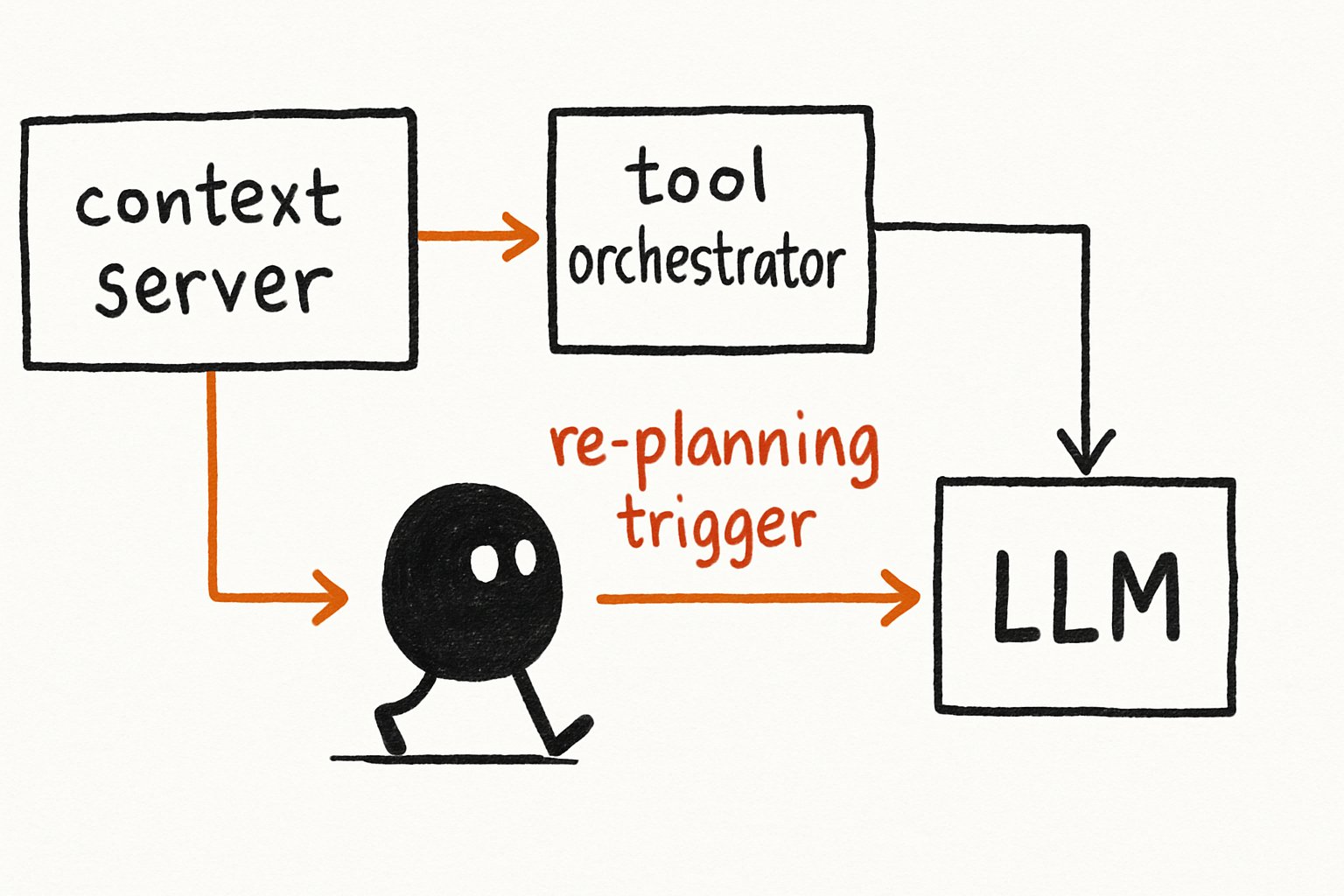
- A context server, not a context window. The LLM should never hold the full context. Instead, run a dedicated context server that manages hierarchical memory, handles pruning, and serves the most relevant tokens to the LLM on each call. This is the equivalent of moving from a single-threaded process to a distributed system.
- Tool orchestration with intent routing. Don’t just call APIs. Use a tool orchestrator that understands the agent’s current intent and can route to fallback tools, cache results, and flag staleness. This is where frameworks like LangGraph or CrewAI start to show their limits — they orchestrate calls, but they don’t manage intent.
- Real-time monitoring and re-planning triggers. Your agent should have a feedback loop that detects when the environment has changed. If a tool returns a different result than expected, or if a user sends a message that contradicts the current plan, the agent should re-plan without waiting for the next user input. LiveBench tasks that change mid-stream punish agents that don’t re-plan.
My take
LiveBench is the best thing to happen to agentic AI since the release of function calling. It exposes the lie that we’ve been telling ourselves: that a good model plus a simple loop equals a reliable agent. It doesn’t. The model is the engine, but the infrastructure is the chassis, the suspension, and the steering. If you’re building agents and you haven’t run them through LiveBench, you’re flying blind.
I’ve seen teams spend months optimizing prompts for static benchmarks, only to watch their agents fall apart on LiveBench’s simplest time-sensitive tasks. The fix isn’t more prompt engineering; it’s a new infrastructure layer that treats context as a first-class resource, not a disposable buffer. Context engineering is the missing layer, and LiveBench is the first benchmark that proves it.
The vendors that win the next wave of agentic AI won’t be the ones with the best base models. They’ll be the ones that build the infrastructure to keep those models coherent, persistent, and adaptive in the real world. Nvidia, Google, and a handful of startups are already moving in this direction. The rest are still optimizing for the wrong benchmark.
Key takeaways
- Static benchmarks (MMLU, HumanEval) measure model capability but not infrastructure reliability. LiveBench measures both.
- Context persistence is the single biggest failure point for agents under LiveBench’s time-sensitive conditions.
- Tool orchestration needs intent routing and stateful fallbacks, not just API calls.
- Context engineering — hierarchical memory, dynamic pruning, stateful tooling — is the missing infrastructure layer.
- Passing LiveBench requires a dedicated context server, not just a bigger context window.
- The winning agentic AI infrastructure will prioritize real-time adaptation over raw model accuracy.
What is the biggest difference between static benchmarks and LiveBench?
Static benchmarks test a model’s knowledge or coding ability in isolation, while LiveBench tests an agent’s ability to maintain coherent reasoning across time, tool failures, and changing conditions. This makes LiveBench a better predictor of production reliability.
Why does context engineering matter more than prompt engineering for agentic AI?
Context engineering builds the infrastructure that keeps an agent’s reasoning coherent across multiple steps, tool calls, and interruptions, while prompt engineering only optimizes a single LLM call. LiveBench proves that even the best prompt fails if the context layer is brittle.