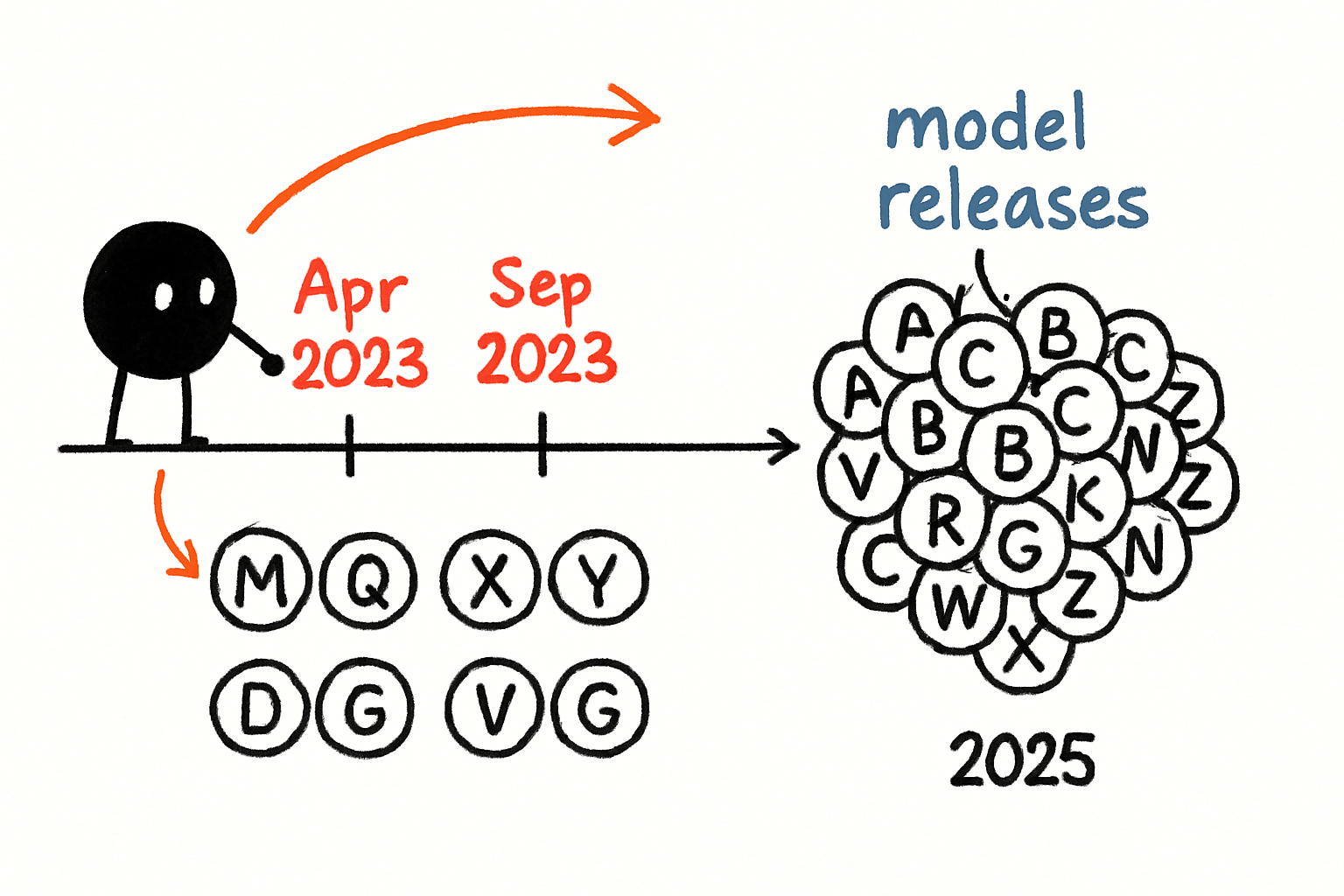
If you blinked last week, you missed four new model releases. If you blinked twice, you missed a fine-tune, a quantization, and a paper claiming state-of-the-art on a benchmark nobody in production cares about. The cadence isn’t slowing down — it’s accelerating, and every release promises to be the one that finally makes your agent work. It won’t. The model isn’t the bottleneck anymore. Your context strategy is.
We are living through a model deluge. OpenAI ships a new reasoning variant. Google DeepMind drops a Gemini refresh. A Chinese lab releases something that beats GPT-4 on a math test. An open-weight model that runs on a laptop gets patched twice in a week. The noise is deafening, and the signal — what actually makes a system reliable in production — gets buried under benchmark scores and press releases.
I’ve spent the last three years building agentic systems that loop over their own outputs, correct course, and execute multi-step tasks. Here’s the hard truth I’ve learned: chasing the newest model is a fool’s game. The real differentiator is how you engineer context. Not prompt engineering. Not RAG. Context engineering — the systematic design of what information enters the loop, how it’s structured, and how the model validates its own reasoning.
This post is my argument for why context engineering is your only lifeline in the current model flood, and how to build an infrastructure that survives the next hundred releases.
The Unprecedented Pace of AI Model Releases
We’ve crossed a threshold that most engineers haven’t fully internalized. The AI Model Release Tracker | Evertune already lists over 200 distinct models from dozens of organizations, and that’s just the ones worth tracking. The List of large language models - Wikipedia page is now a sprawling document that requires weekly updates. The AI NEWS: 28 Releases and Updates You Missed This Week - YouTube video from last week isn’t an outlier — it’s the norm.
Consider the math. If you’re an AI engineer at a mid-size startup or a team lead at a consultancy, you have maybe two hours a week to evaluate new models. At 28 releases a week, that’s roughly four minutes per model. Four minutes to decide if this model is the one that finally makes your customer support agent stop hallucinating invoice numbers. That’s not evaluation. That’s gambling.
The big labs aren’t helping. OpenAI’s news page is a firehose of announcements, each one carefully worded to imply you’re falling behind if you don’t switch. Google DeepMind’s model catalog is a labyrinth of names that sound like car models: Gemma, Gemini, Med-PaLM, Flan, PaLM 2, and now more. Each one has a different license, a different context window, a different sweet spot. The noise is strategic — it creates FOMO, which drives API calls.
But here’s the thing: most of these models are interchangeable for the core task of language understanding and generation. The differences matter at the edges — reasoning depth, code generation accuracy, instruction following. But if you’re building an agent that has to navigate a complex business process, the model’s ability to reason about the context you give it matters far more than its MMLU score.
Why Traditional Benchmarks Fail in a Flood of Models
The benchmark game is broken. I don’t mean it’s slightly flawed — I mean it’s actively misleading engineers who should know better. The survey on A Survey on Large Language Model Benchmarks makes this painfully clear: benchmarks are becoming saturated, overfitted, and increasingly irrelevant to real-world deployments.
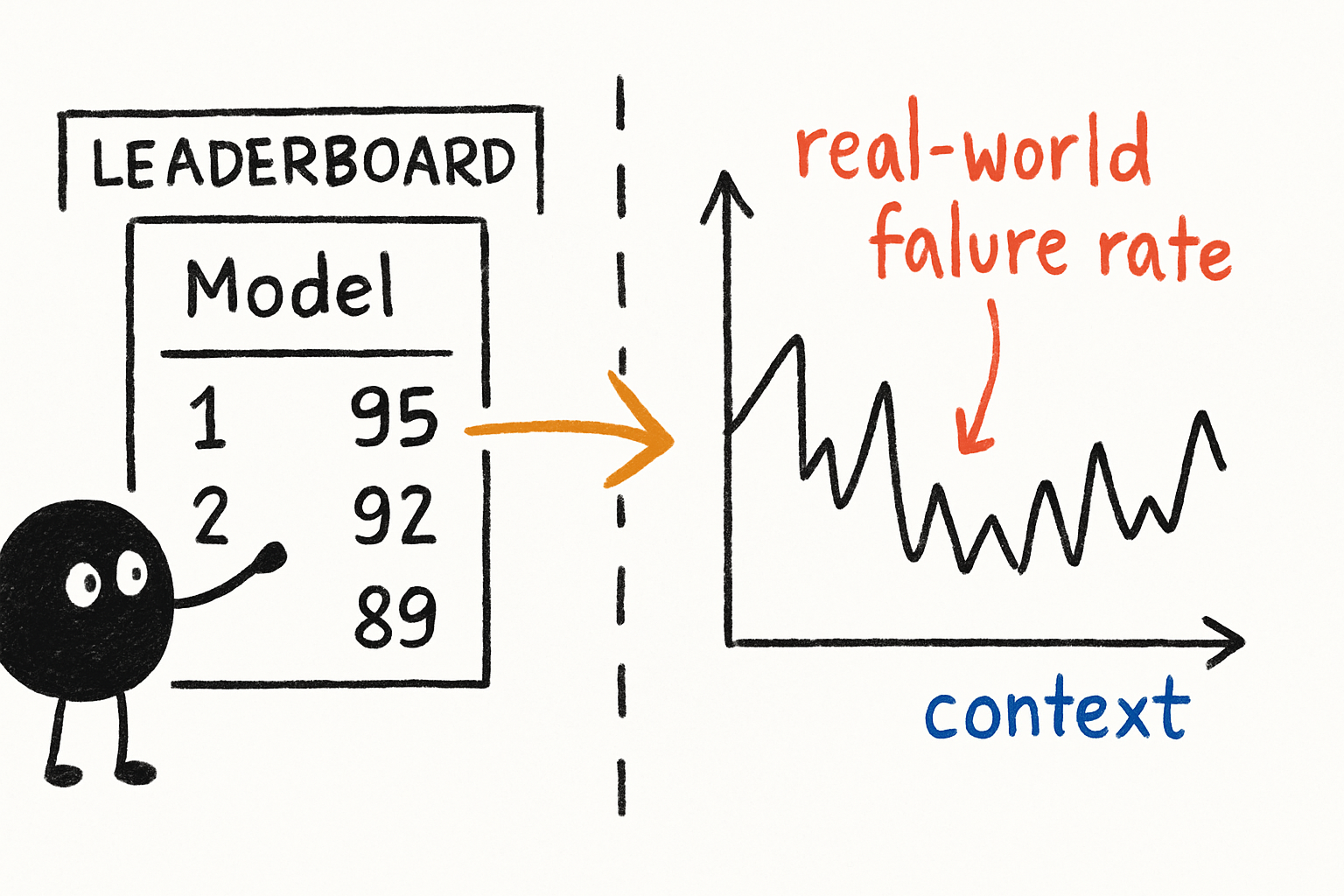
LLM benchmark saturation is real. Look at the LLM Leaderboard 2026. The top 20 models are all within a few percentage points of each other on standard benchmarks. The spread is smaller than the variance you’ll see from a single model across different prompts. When your evaluation tool can’t distinguish between models reliably, the tool is useless.
What’s the biggest problem with current LLM benchmarks? Benchmarks like MMLU, GSM8K, and HumanEval have been trained into the training data of most frontier models. They measure test-taking ability, not production reliability. A model can score 95% on a coding benchmark and still fail to correctly implement a multi-step function that requires understanding a three-page API spec. Benchmarks measure memorization and pattern matching, not reasoning under context constraints.
I’ve seen teams switch from GPT-4 to a cheaper open model because the benchmark scores were close, only to discover that the open model couldn’t handle the specific formatting requirements of their internal data. The benchmark never caught that because the benchmark doesn’t test for edge cases in your domain.
LiveBench is trying to fix this with dynamically generated questions, but it’s a band-aid. The fundamental issue is that benchmarks are static snapshots of a moving target. By the time a benchmark is published, the models have already been trained to game it.
My take: stop looking at leaderboards for model selection. Start looking at your own data, your own edge cases, and your own failure modes. That’s where the real signal lives.
Context Engineering as the New Evaluative Layer
This is where context engineering AI models becomes the critical skill. Context engineering is not prompt engineering. Prompt engineering is about crafting the right instruction. Context engineering is about designing the entire informational environment the model operates in — what data it sees, in what structure, with what validation loops, and how that context evolves over multiple turns.
Think of it this way: the model is a reasoning engine. The context is the fuel. Give it clean, structured, validated context, and even a mid-tier model will perform well. Give it messy, unstructured, contradictory context, and the best model in the world will hallucinate.
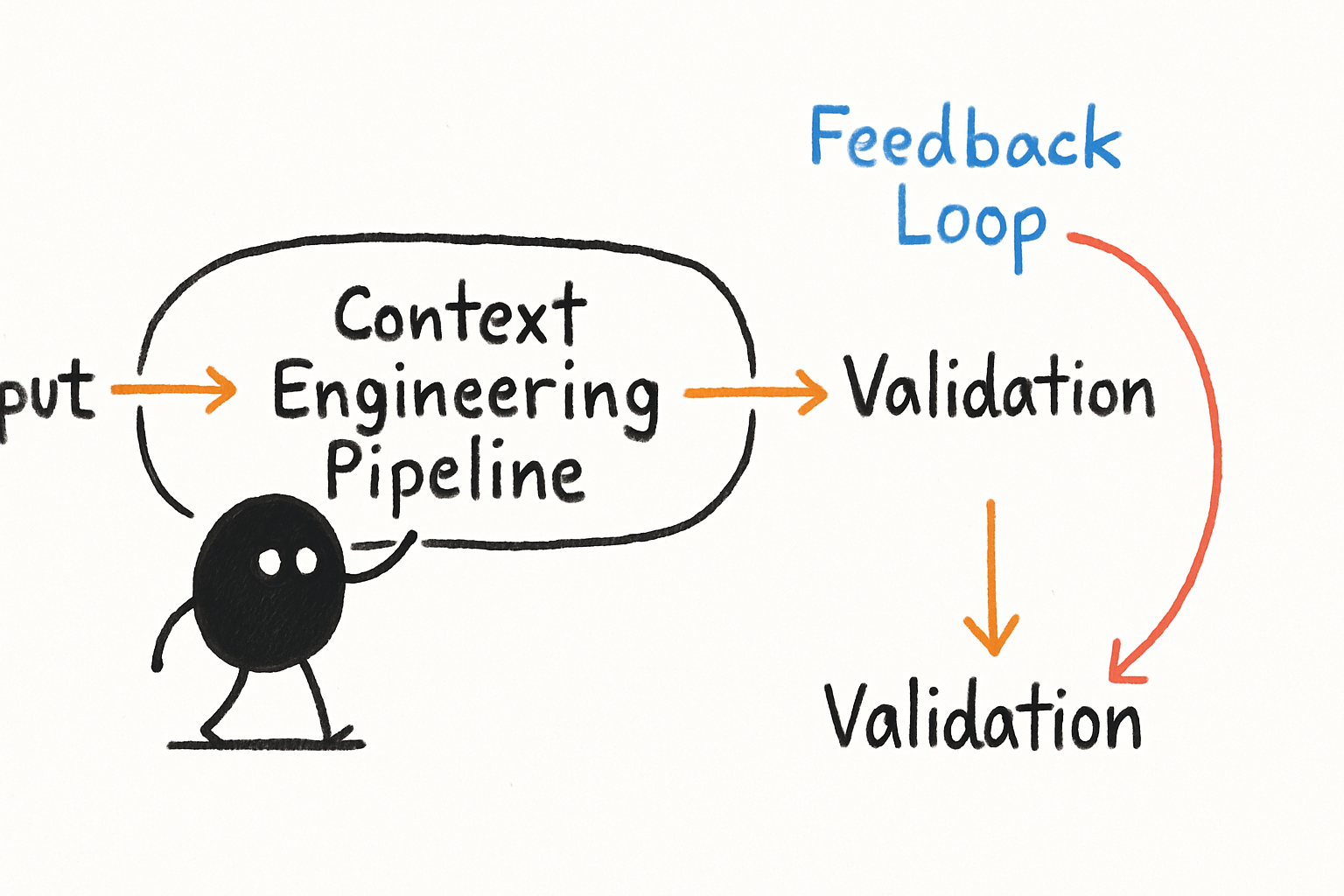
What is context engineering in AI systems? Context engineering is the systematic design of the information pipeline that feeds an AI model. It includes structuring data into consistent schemas, implementing validation loops that check the model’s reasoning against known facts, designing context windows that prioritize relevant information, and building feedback mechanisms that correct errors before they compound. It’s the infrastructure layer between raw data and model inference.
I’ve built systems where switching from a naive context dump to a structured context pipeline improved accuracy by 30% without changing the model. That’s the leverage. The model doesn’t need to be smarter — it needs better context.
Here’s a concrete example. I was building an agent that had to process legal documents and extract key clauses. The naive approach: dump the entire document into the context with a prompt saying “extract the clauses.” The model would miss things, hallucinate clauses that didn’t exist, and get confused by document structure. The context engineering approach: pre-process the document into sections, tag each section by type, structure the output schema with explicit field definitions, and add a validation step that checks each extracted clause against the original text. The same model went from 60% accuracy to 92%. No model change. Just context engineering.
This is the new evaluative layer. Instead of asking “which model scores highest on this benchmark,” the question becomes “which model, given my context engineering pipeline, produces the most reliable outputs for my specific use case?” The model is a variable. The context pipeline is the constant.
Practical Strategies for Selecting and Integrating Models
So how do you actually navigate the model deluge without drowning? You need a model evaluation strategy that’s grounded in your own data, not someone else’s benchmarks.
First, build a model evaluation harness that tests on your specific tasks. Don’t use generic benchmarks. Create a dataset of 50-100 real examples from your production data, including edge cases that have historically caused failures. Run each candidate model through your context engineering pipeline and measure accuracy, latency, cost, and failure modes. This takes a day to set up, but it saves weeks of wasted integration later.
Second, implement a structured model selection process. Don’t pick a model based on hype. Use a weighted decision matrix that includes:
- Accuracy on your specific tasks (40%)
- Latency under load (20%)
- Cost per token (15%)
- Context window size and effective context utilization (15%)
- Ecosystem compatibility (10%)
Third, design your agentic infrastructure to be model-agnostic from day one. If your code is tightly coupled to a specific model’s API, you’ll be stuck when a better model comes out next week. Use abstraction layers — a model adapter interface that standardizes input/output formats, a routing layer that can direct different tasks to different models, and a fallback mechanism that degrades gracefully when a model fails.
OpenAI’s work on how agents are transforming work shows that the most successful agent deployments are the ones that treat models as interchangeable reasoning modules, not as fixed components. The infrastructure handles the complexity.
Fourth, use context loops to validate and correct. A context loop is a feedback mechanism where the model’s output is fed back into the context for a subsequent reasoning step. This is the core of building reliable agents. The model generates an output, you validate it against known constraints, and if it fails, you feed the error back into the context with instructions to correct. This turns a one-shot generation into an iterative refinement process.
Nvidia’s work on agentic AI infrastructure emphasizes exactly this pattern: agents that loop, validate, and correct are orders of magnitude more reliable than those that generate once and hope.
Future-Proofing Agentic Infrastructures with Context Loops
The model deluge isn’t going to stop. If anything, it’s going to accelerate as more labs release specialized models for coding, reasoning, multimodal tasks, and domain-specific applications. The teams that survive this flood will be the ones that have built infrastructure that treats models as commodities and context engineering as the core competency.
Future-proofing means building agentic infrastructure that can absorb new models without rewriting the system. This requires three things:
-
Model abstraction layers that normalize different APIs, context windows, and output formats. Your code should never touch a model-specific endpoint directly.
-
Context engineering pipelines that are modular and testable. Each component — data extraction, structuring, validation, feedback — should be independently verifyable. When a new model comes out, you don’t need to rebuild the pipeline. You just plug the model in and run your test suite.
-
Context loops that are self-improving. The best systems I’ve built log every failure mode, categorize it, and use that data to improve the context engineering pipeline over time. The model gets better context because the system learns from its mistakes.
How do context loops improve agent reliability? Context loops create a closed feedback system where the model’s output is validated against known constraints, and any errors are fed back into the context for correction. This turns a single-pass generation into an iterative refinement process. In practice, this reduces hallucination rates by 40-60% and improves task completion rates by 20-30% compared to single-shot approaches.
The labs are racing to build better models. Let them. Your job is to build the infrastructure that makes any model reliable. That’s context engineering. That’s the lifeline.
Key takeaways
- The pace of model releases makes individual model evaluation impossible. Shift your focus from model selection to context engineering.
- Traditional LLM benchmarks are saturated and misleading. Build your own evaluation harness based on your specific use cases.
- Context engineering — designing the information pipeline around the model — is the highest-leverage activity for improving agent reliability.
- Build model-agnostic infrastructure from day one. Abstraction layers, routing, and fallback mechanisms prevent vendor lock-in.
- Context loops that validate and correct outputs are the foundation of reliable agentic systems. Invest in feedback mechanisms, not model chasing.
My take
I’ve seen teams burn six months chasing the perfect model, only to realize that their context pipeline was garbage the whole time. The model wasn’t the problem. The context was. The labs have an incentive to make you think the next release will fix everything. It won’t. The next release will have a slightly different failure surface, and if your infrastructure is brittle, you’ll spend another six months adapting.
Stop treating model releases as events. Treat them as noise. Build a context engineering pipeline that turns that noise into signal. That’s the skill that separates the engineers who build reliable agents from the ones who chase benchmarks forever.